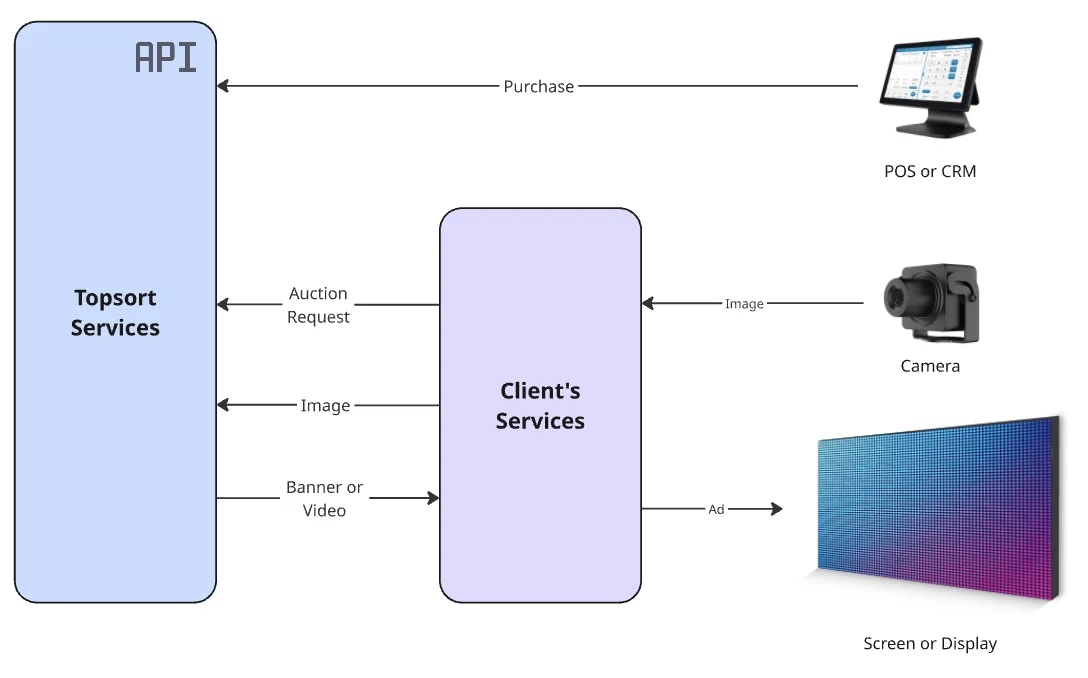
Topsort offers different ways for retailers to use in-store ads, depending on your goals for showing ads, measuring audience, and tracking sales.
1. Onsite to In-Store Attribution
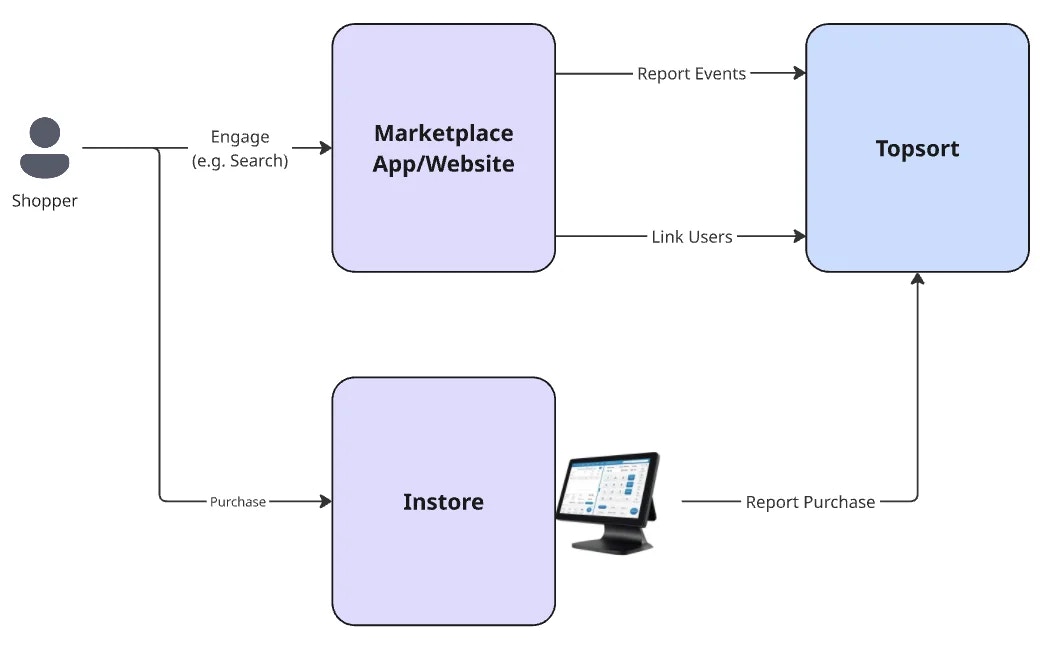
Onsite to Instore attribution lets Topsort connect ads seen online (on your website or apps) to actual purchases made instore.
How It Works:
- Reporting Online Interactions and Instore Purchases: Retailers send to Topsort clicks and impressions made on the online ads, and purchases made in their stores, using the Events API.
- Linking Users: To know which online ad led to an instore sale, the retailers can use our Linking Users API. This helps match a person’s online activity with their instore buying.
This process helps businesses see how well their online ads encourage people to visit and buy products in their physical stores. Topsort can also track sales of related items, giving a fuller picture of how well ads are working.
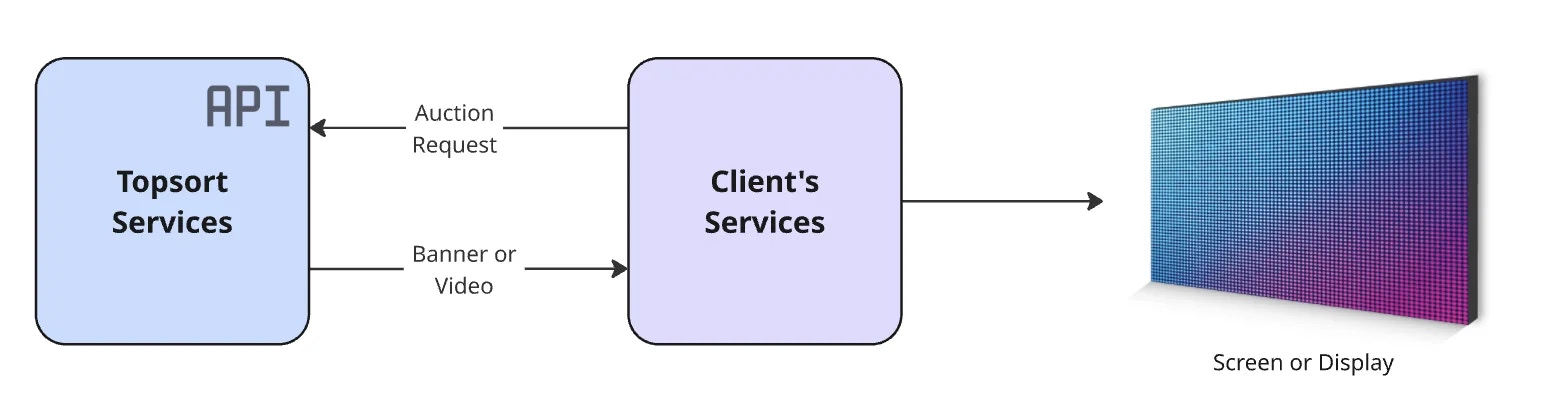
2. Ad Display Only
This option is suitable for clients who wish to display ads on their in-store screens using Topsort’s auction platform. The primary focus is on showing ads, without detailed audience measurement or direct sales attribution.
3. Ad Display with Audience Optimization
In this case, a key feature is the ability to measure the audience viewing each screen. This is done by sending images from a camera to Topsort for audience measurement. Ads serving is optimized based on information from these images. The images can be used to estimate the audience’s presence and general demographics, which helps decide which ad to show. This option does not track sales, and clients do not share their purchase data.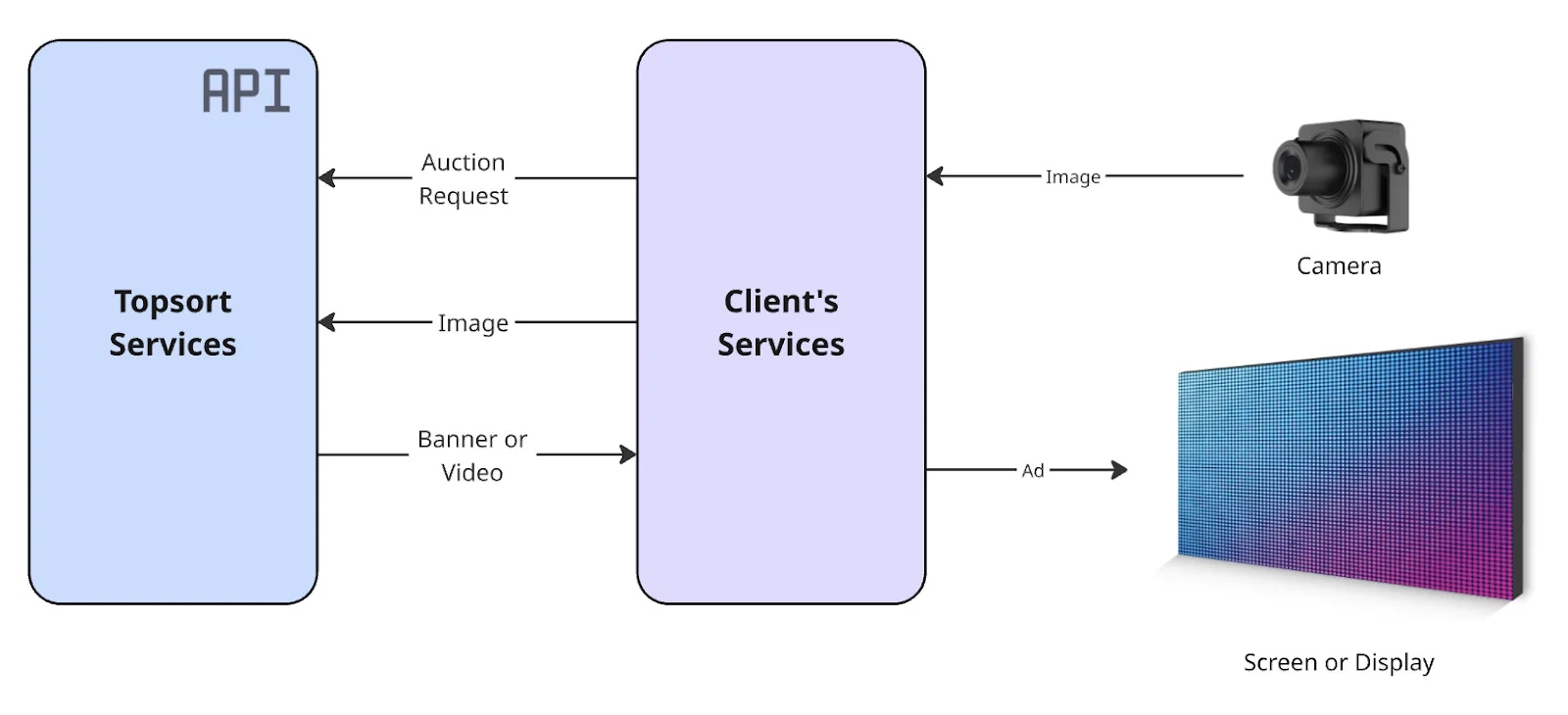
4. Ad Display with Direct Sales Attribution (Small Store Focus)
This use case builds upon the “Ad Display with Audience Optimization” by adding direct sales attribution, making it particularly good for smaller retail environments. In this scenario, clients still utilize screens for ad display, powered by Topsort’s auction platform, and measure audience presence using cloud-based image processing from cameras. The primary distinction is the integration of purchase data from the client’s POS (Point of Sale) or CRM systems. The system continues to display ads based on real-time image analysis, with images triggering both auction requests and audience/demographic estimations. The audience measurement remains limited to individuals detected in the trigger image. However, because the store is sufficiently small, direct attribution of sales can be achieved without the need for a complex user tracking model. This allows for direct attribution within a short timeframe after ad exposure.